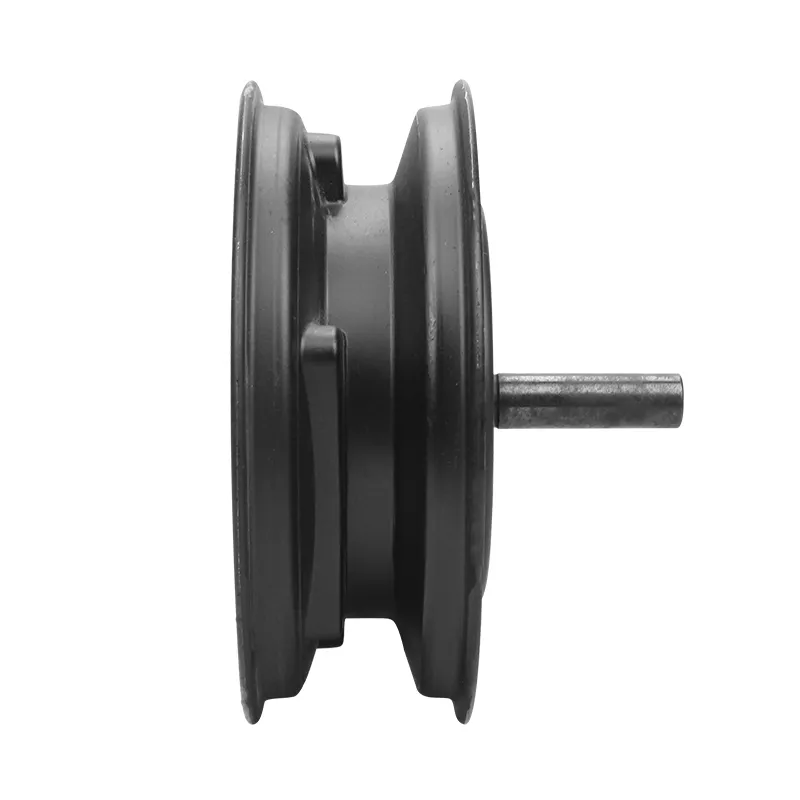
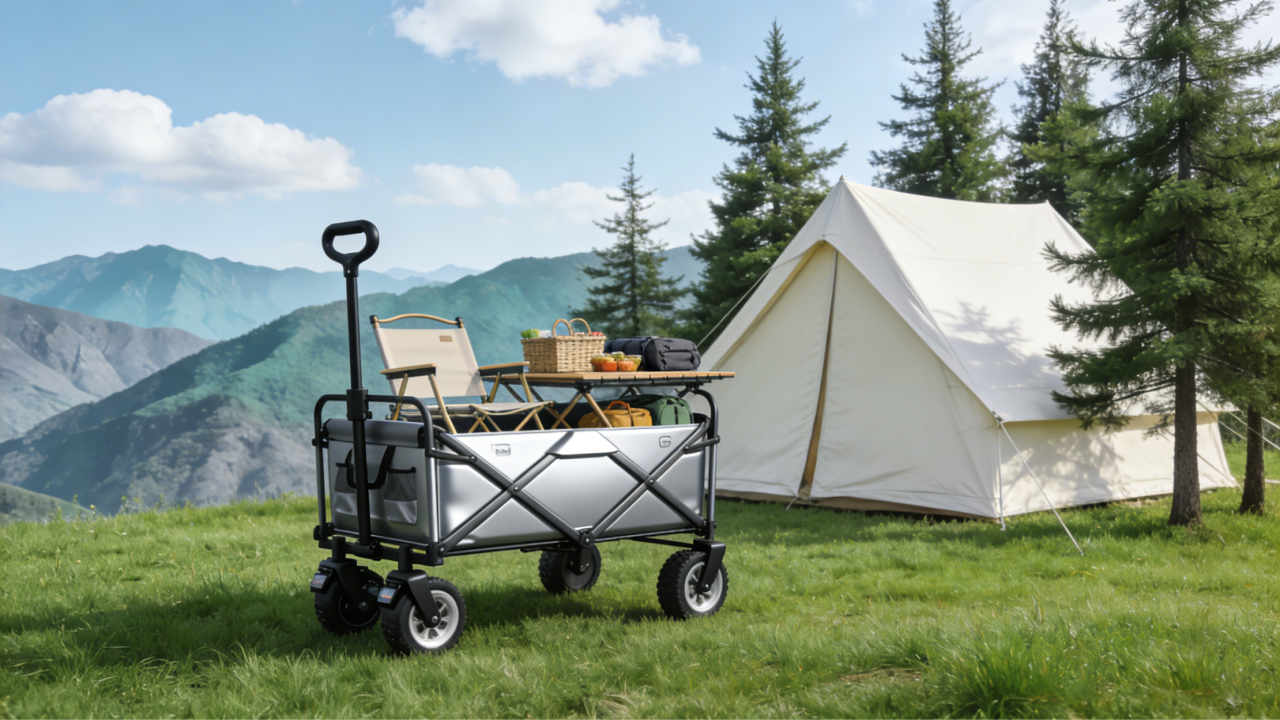
As outdoor enthusiasts push camping trailers into steeper, sandier and rock-strewn terrain, traditional drive systems increasingly show limits—wheel slip, overheating and premature failure. This report examines a practical upgrade based on a custom brushless hub motor (designed by JinHaixin) and explains how it raises off-road capability, thermal reliability and service life for OEMs, parts suppliers and the DIY market.
Field feedback from commercial fleets and private users consistently highlights three recurring issues on non-paved surfaces: rapid loss of traction on sand, heat build-up under sustained torque demand, and complex mechanical layouts that complicate retrofit work. In multiple repair logs, traditional geared drives required 30–50% more maintenance hours after extended off-road use compared to the proposed brushless hub solution.
The upgrade centers on a sealed brushless DC hub motor with a dual-shaft, dual-thread mounting interface. Key benefits include:
Independent in-field tests (see boxed excerpt) compared a conventional geared motor assembly to the brushless hub motor across three representative scenarios: sandy climb (20% grade), continuous mixed-terrain loop (30 minutes), and hill-start torque bursts. Results were measured using thermocouples on motor casing and inline torque sensors at the wheel.
Interpreting the data: the brushless hub maintained about 75–90% of peak torque under sustained load, while the conventional design dropped to ~60% due to thermal throttling. Lower temperature rise directly correlated to fewer torque derates and fewer traction control interventions.
The motor’s open-gear approach pairs larger tooth profiles and accessible clearance for grit ejection, reducing tooth-edge loading and jamming when compared with fully enclosed micro-gearboxes. In off-road trials, this meant faster recovery from brief slip episodes and simplified on-trail maintenance—critical for remote camping use.
Internal magnetic path refinements—shorter leakage paths and higher-grade NdFeB placement—lower internal hysteresis and reduce local hot spots. Practically, this yields a projected 20–35% increase in mean time between failures (MTBF) under high-duty off-road cycles versus typical hub motor designs tested in the same protocol.
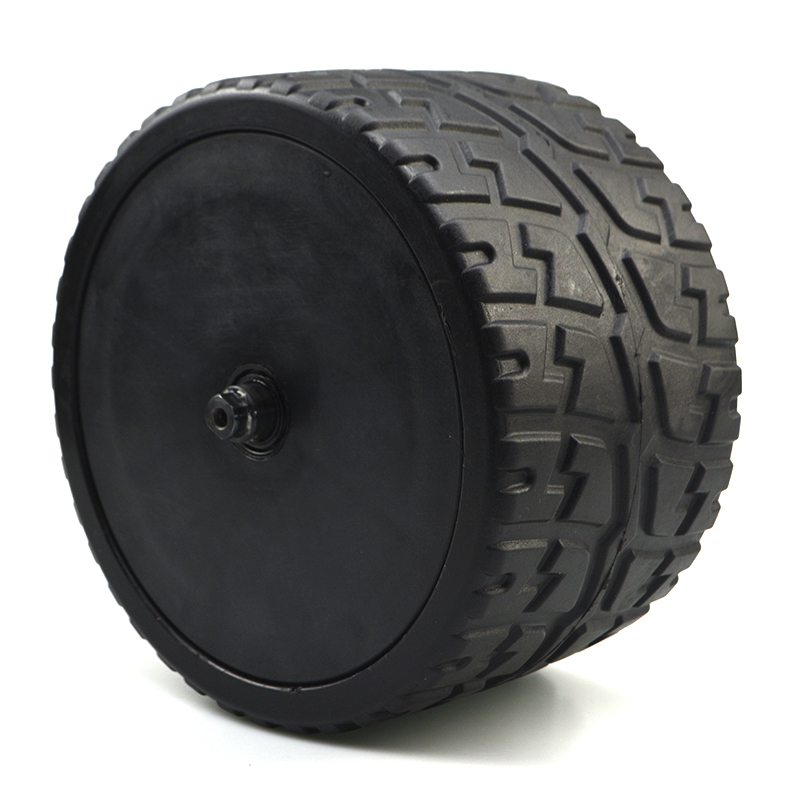
As vehicle electrification expands, trailer motors are shifting from bespoke repairable units to standardized, modular electric drivetrains. Selection criteria increasingly emphasize continuous torque at low RPM, robust thermal management, and simple mechanical interfaces that support scale manufacturing.
This brushless hub approach helps global EV manufacturers achieve standardized production while supporting bulk procurement strategies that reduce overall cost. For tier suppliers and integrators, the focus is now on combining field-proven durability with production-ready interfaces.
Request integration kits, sample units and production pricing—support available for mass orders and OEM standardization.
 322
|
322
|
 IP67 waterproof motor
electric go-kart motor sealing
hub motor dustproof solutions
outdoor e-vehicle motor maintenance
241
|
high-torque brushless hub motor
industrial flatbed trolley power upgrade
brushless vs brushed motor comparison
hub motor power selection guide
IP67 waterproof motor
electric go-kart motor sealing
hub motor dustproof solutions
outdoor e-vehicle motor maintenance
241
|
high-torque brushless hub motor
industrial flatbed trolley power upgrade
brushless vs brushed motor comparison
hub motor power selection guide


.png?x-oss-process=image/resize,h_100,m_lfit/format,webp)
.png?x-oss-process=image/resize,h_100,m_lfit/format,webp)
.png?x-oss-process=image/resize,h_100,m_lfit/format,webp)