Home > News > High-Torque Brushless Hub Motors for Industrial Flatbed Trolleys: Technical Principles & Efficiency Upgrade Guide

High-Torque Brushless Hub Motors for Industrial Flatbed Trolleys: Technical Principles & Efficiency Upgrade Guide

WWTrade
2026-01-22
Technical knowledge
This article explains how high-torque brushless hub motors (permanent-magnet synchronous hub motors) empower industrial flatbed trolleys, with a practical focus on selection and efficiency gains for warehouse and dock environments. It details core structure and energy-conversion mechanisms — rotor, concentrated/ distributed windings, permanent magnets, and the controller-driven electronic commutation that replaces mechanical brushes — highlighting why brushless designs deliver smoother start-up, superior torque density, and longer service life under load fluctuations compared with brushed motors. The abstract maps typical power bands (150 W–500 W) to representative payloads (approximately 50 kg–500 kg), and summarizes how torque, gear ratio, and wheel diameter interact to determine starting acceleration, slope-climbing ability, and continuous duty performance. Control-layer strategies are outlined: closed-loop torque control, field-oriented control (FOC) for high-efficiency low-speed torque, and load-adaptive current limiting to optimize energy use and protect components. Recommended application matches are provided — low-power brushless hub motors for light warehouse trolleys and high-torque variants for heavy dockside handling — together with notes on thermal management, regenerative braking opportunities, and system-level trade-offs. The tone is technical yet accessible, aimed at engineers and procurement specialists in the awareness stage of their buying journey. Which configuration fits your scenario? For tailored recommendations and integration support, get your bespoke motor solution now.
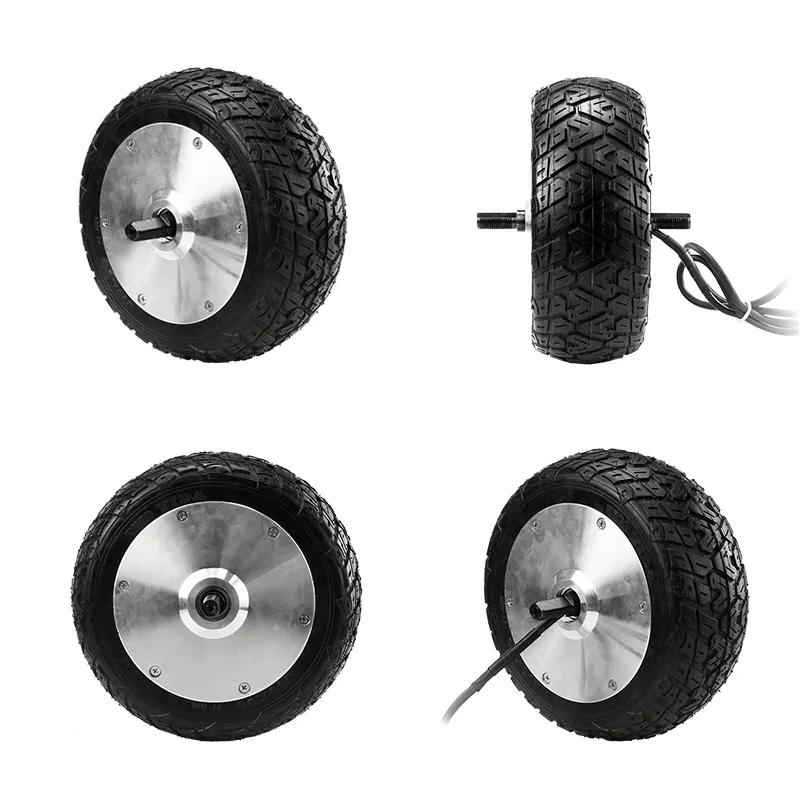
Cross-section of high-torque brushless hub motor showing permanent magnets and stator

High‑Torque Brushless Hub Motors: Principle and Practical Guide for Industrial Flatbed Push Carts

High‑torque brushless hub motors (BLDC / PMSM in-wheel designs) are increasingly adopted to upgrade industrial flatbed push carts used in warehouses, logistics yards and docks. This article explains the core electromechanical principles, compares brushless vs brushed options under variable loads, and provides actionable power‑to‑payload guidance (150W–500W) for common industrial scenarios.

Core structure and energy conversion (technical explanation)

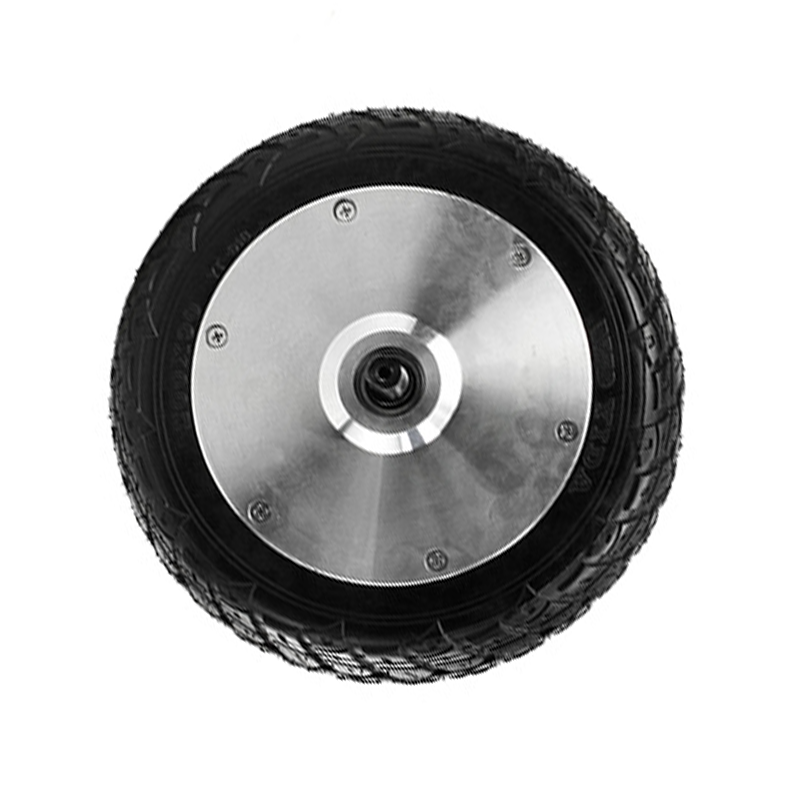
A brushless hub motor typically integrates a stator with multi‑phase concentrated or distributed windings and a rotor carrying high‑energy permanent magnets. When a three‑phase inverter drives controlled currents into the stator, a rotating magnetic field is produced; the rotor synchronizes to this field producing torque directly at the wheel. Modern motor controllers use field‑oriented control (FOC) to align current vectors with rotor flux, maximizing torque density and minimizing current draw under varying loads.
Product-Application-3.png

Why choose brushless (PMSM / BLDC) for industrial carts?

Compared to brushed motors, brushless hub motors offer measurable operational advantages in industrial handling:

  • Higher sustained efficiency (typically 85–95% vs ~70–80%), lowering battery consumption for electric push carts.
  • Superior low‑speed torque control and smoother start/stop behavior—critical for heavy payloads and ramp/hill starts.
  • Lower maintenance (no brushes) and better longevity in dusty or wet warehouse environments.
  • Easy integration with regenerative braking and advanced motor controllers for energy recovery and safety features like electronic parking brake.

Power bands vs recommended payload (practical table)

Below is a practical mapping for direct‑drive hub motors when wheel rpm is kept low (approx. 200–350 rpm typical for industrial carts). Torque estimates use T(N·m) ≈ P(kW)×9550 / rpm as a guideline at nominal continuous speed.

Motor Power (W) Continuous Torque @ 300 rpm (N·m) Recommended Payload (kg) Typical Use
150 W ≈ 4.8 N·m 50–120 kg Light warehouse carts, small trolleys
250 W ≈ 8.0 N·m 120–250 kg Medium loads, mixed pick lines
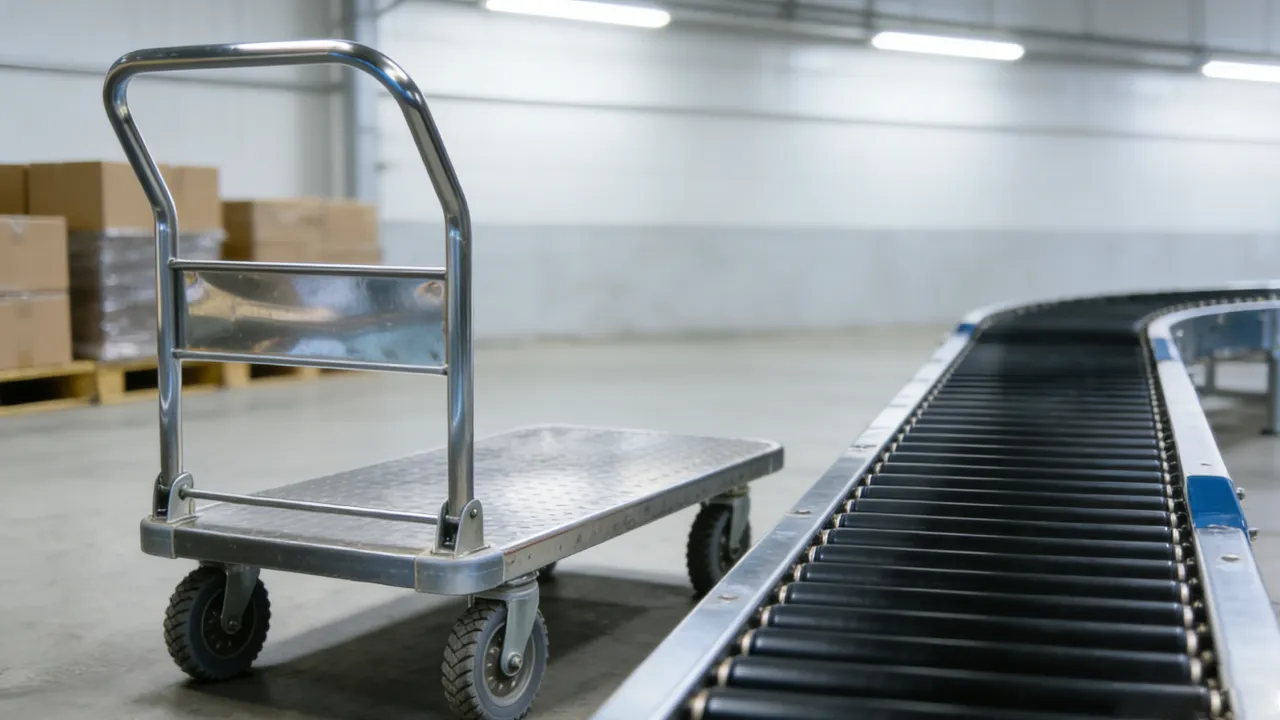
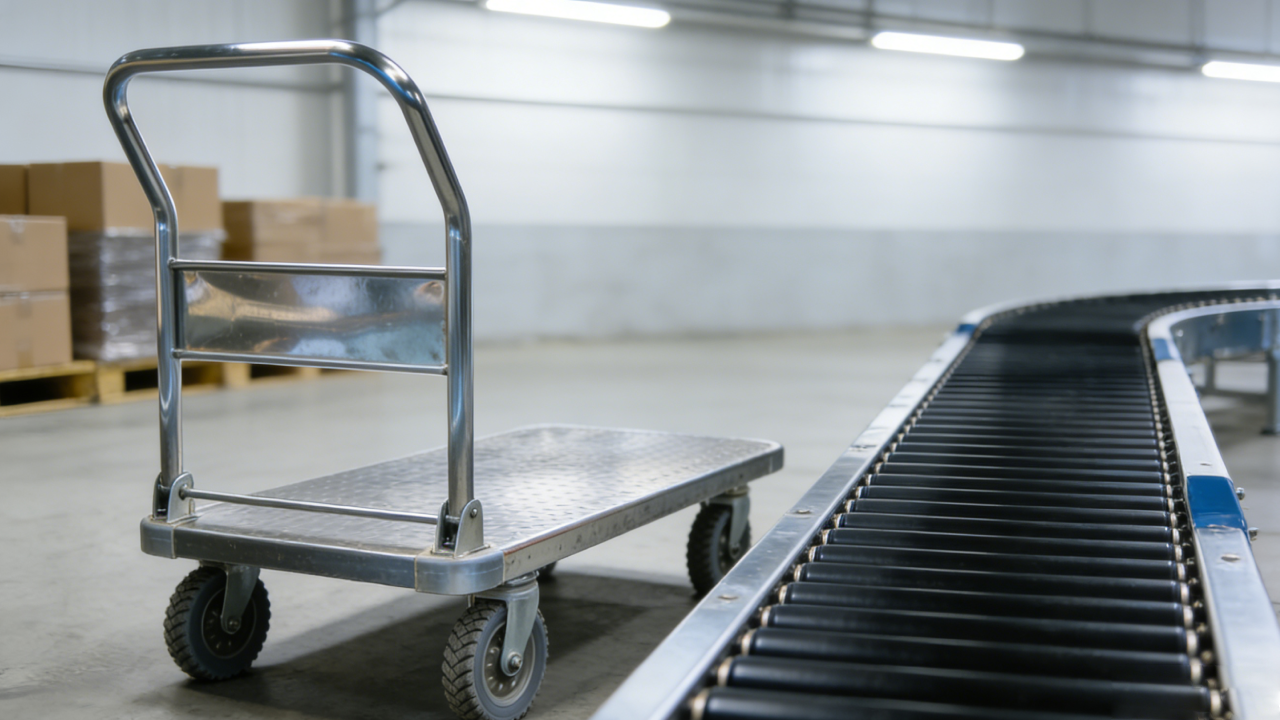
350 W ≈ 11.1 N·m 250–400 kg Heavy floor carts, conveyor feed trucks
500 W ≈ 15.9 N·m 350–500 kg Dockside pulling, heavy material handling
Flatbed-trolley.png

Behavior under load fluctuations — brushless vs brushed

Brushed motors show faster torque decay and higher maintenance needs when loads fluctuate (brush wear, commutation losses). Brushless hub motors controlled by modern inverters maintain torque with closed‑loop current control and minimal commutation loss. Typical observable differences:

  • Transient response: BLDC + FOC gives better low‑speed torque ripple control and faster recovery on load spikes.
  • Thermal performance: BLDC continuous duty ratings remain stable longer due to higher efficiency and better heat distribution in hub geometry.
  • Safety: motor controllers can implement current limiting and hill‑hold to prevent runaway under overload—feature sets less available for simple brushed systems.

Motor + controller coordination: strategies for energy efficiency and reliability

To maximize uptime and energy efficiency for industrial push carts, deploy the following control strategies:
  • Field‑Oriented Control (FOC): Precise torque control, reduced ripple, higher efficiency at low speeds.
  • Soft start / ramp profiles: Smooth acceleration reduces inertial loads and peak currents (extend battery and drivetrain life).
  • Dynamic current limiting & thermal derating: Protect the motor under prolonged heavy duty cycles.
  • Regenerative braking: Capture energy during deceleration—useful in stop‑start warehouse operations (recovers 5–15% of energy on typical duty cycles).
  • Adaptive torque mapping: Automatically increase torque margin on ramps or when wheel slip detected (via simple speed/torque observers).
8-inch-diameter-200mm-tire-width-83-open-gear-110-bilateral-threaded-shaft-5.png

Selection checklist — what engineers should verify

  1. Required continuous and peak torque (consider start‑up and ramp gradients).
  2. Nominal system voltage (24V and 48V are common; higher voltage reduces current and cable losses).
  3. Thermal path and IP rating for dusty/wet environments.
  4. Controller features: FOC, regen, CAN/RS485 integration, programmable torque maps.
  5. Wheel diameter and gear ratio (direct‑drive vs geared hub affects torque distribution and speed).

Quick guidance: which configuration fits your scenario?

Light, repetitive pick lines with smooth floors → 150–250 W hub motors. Mixed loads and frequent starts/stops → 250–350 W. Heavy dockside tugs with ramps → 350–500 W and controllers with robust thermal protection and hill‑hold.

Your scenario fits which configuration? Use the table above and the checklist to estimate required continuous torque and then select a motor-controller pair with at least 20–30% torque margin for peak events.

Implementation note and real-world gains

In field tests across warehouse fleets, retrofitting brushless hub motors and smart controllers reduced operator effort by up to 40% and energy consumption per shift by 15–25% (depending on duty cycle and regen implementation). Maintenance intervals lengthened due to eliminated brush replacement and lower commutation heat.

For engineers specifying systems, a conservative approach is to size for continuous duty at expected max gradient plus a 25% safety factor. Verify battery capacity and peak current capability—500W continuous at 48V typically requires ~10–12 A continuous and higher short‑term peaks for torque bursts.

Get Your Bespoke Motor Solution Now

Request a tailored motor + controller package and a load‑matching study for your carts.

Note: The provided torque and payload mappings are engineering guidelines for early specification and comparison. Detailed selection should include slope, wheel diameter, duty cycle, ambient temperature and electrical system constraints.

Name *
Email *
Message*

Recommended Products

Related Reading

Camping Trailer Power Upgrade: Brushless Hub Motor Installation & Tuning Guide

2026-01-22 | img 43 | img camping trailer power upgrade brushless hub motor hub motor installation tips off-road hub motor performance

IP67 Waterproof Motors in Outdoor Electric Go-Karts: Sealing Technologies, Test Insights and Maintenance

2026-01-22 | img 322 | img IP67 waterproof motor electric go-kart motor sealing hub motor dustproof solutions outdoor e-vehicle motor maintenance
Popular articles
wwtrade-about-us-55.png
Camping-cart.png
Recommended Reading